Wall surfaces frequently suffer from being treated as flat backdrops rather than active spatial elements. Incorporating vertical fluted wall paneling introduces a tactile structural grid that guides the eye through transitions and anchors key room volumes. The resulting interplay between highlight and shadow creates continuous visual movement without cluttering the floor plan.
Defining Scale and Proportional Recess Depth
The impact of fluted paneling depends entirely on scale and profile depth. Narrow micro-fluting offers delicate texture suited for focal headboards or inset joinery doors. In contrast, deeper half-round moldings create strong architectural shadows that suit double-height entryways and expansive dining walls.
Pairing Rich Walnut with Matte Architectural Finishes
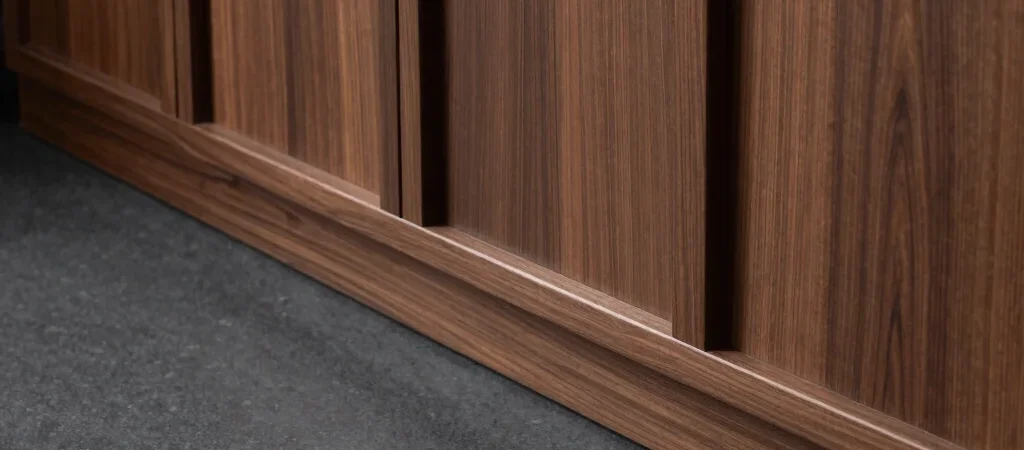
Deep walnut paneling introduces warmth and weight to sharp contemporary architecture. To prevent dark timber from dominating the room, balance the wood grain against high-contrast matte surfaces such as soft white plaster or dark charcoal basalt. This contrast allows the fluted texture to pop while retaining visual balance.
Seamless Acoustic and Concealed Door Integration
Beyond aesthetic elegance, continuous fluted panels offer practical spatial solutions. Modern acoustic core backings dampen echo in open-concept floor plans, turning decorative cladding into an acoustic asset. Furthermore, the repeating vertical lines disguise flush interior doors and hidden storage, preserving clean architectural planes.